

5 Signs Your Green Bay Trees Won't Survive the Next Big Storm
As a homeowner in Brown County, you know our weather doesn't play fair. From heavy "wet" snow in December to high-wind summer thunderstorms rolling off the Bay, your trees are under constant stress. At Mauricio’s Tree Service, we specialize in identifying hazards before they become emergencies.
Here are the top five red flags to look for when inspecting your property this season:
1. The "V-Shape" Split (Common in Maples)
Many of our local Maples have what arborists call "included bark"—where two main stems grow in a tight V-shape. This is a structural weak point. When ice or heavy snow accumulates, these stems act like a lever, splitting the tree down the middle. If you see a crack starting in that "V," it needs immediate attention.
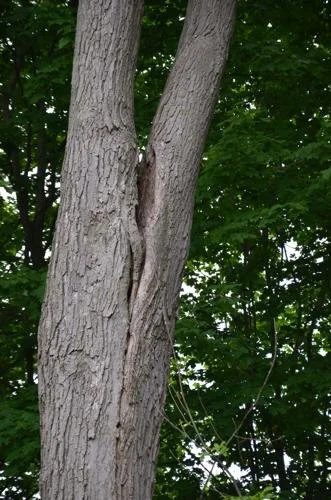
This image shows a mature maple tree, likely a red maple (Acer rubrum) or sugar maple (Acer saccharum), exhibiting a significant structural defect known as included bark
2. D-Shaped Holes (The Emerald Ash Borer)
The Emerald Ash Borer has hit Green Bay hard. Look for small, D-shaped exit holes in the bark or "flecking" (where woodpeckers have stripped bark away to find larvae). An infested Ash tree becomes brittle and incredibly dangerous to remove once it dies completely.
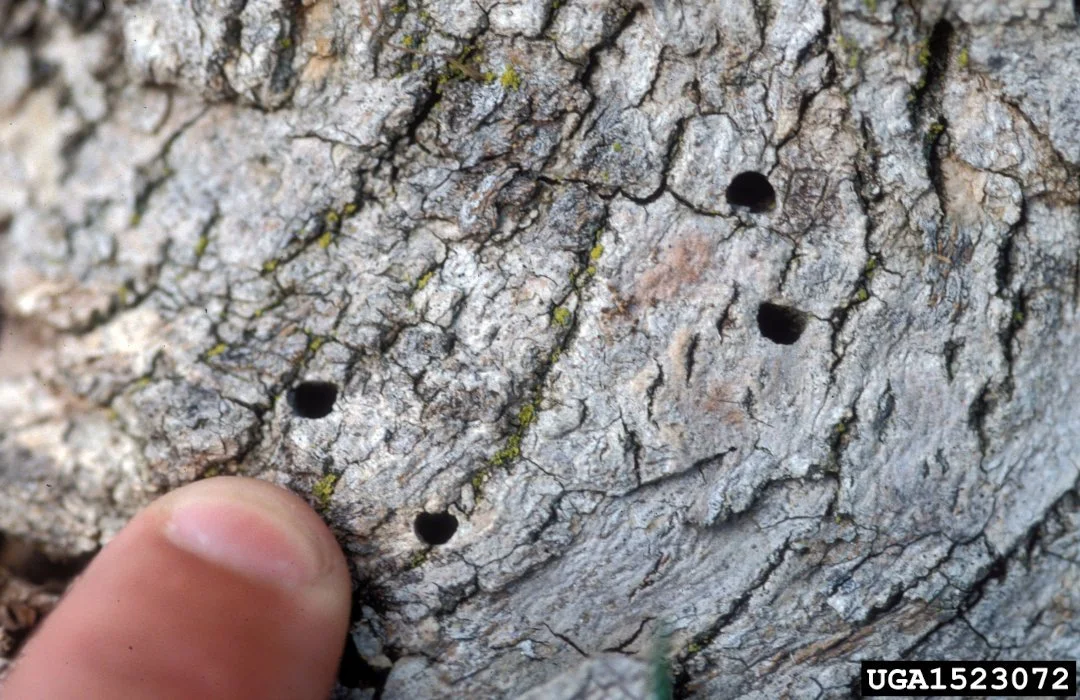
These distinctive D-shaped exit holes, roughly 1/8 inch wide, are a definitive sign that adult emerald ash borers have emerged from the tree
3. Lean and "Heaving" Soil
If a tree has a sudden lean, or if you notice the soil on one side of the base is lifting or cracking, the root system is failing. In Wisconsin, saturated soil during spring thaws makes these trees highly susceptible to "uprooting" during wind events.
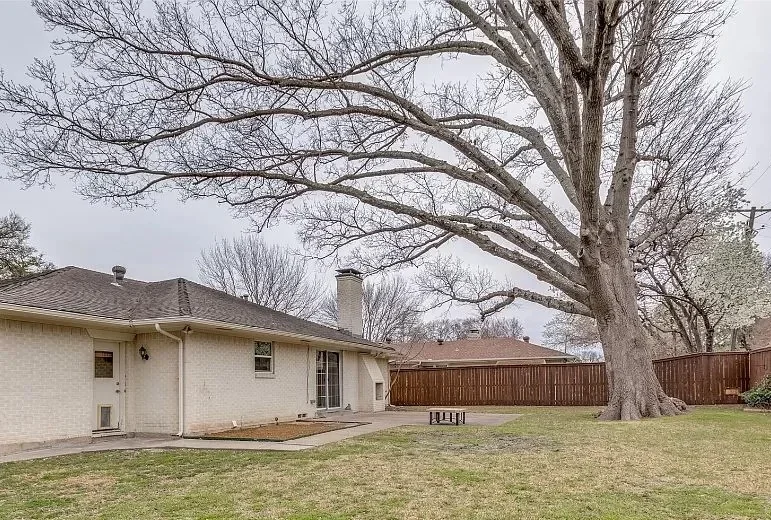
This Green Bay property is one heavy snowstorm away from a major insurance claim. Notice how the primary weight of the tree is shifted directly over the roofline and chimney. Structural pruning or total removal is the only way to protect the home’s integrity.
4. Dead "Hanger" Branches
Look up. Are there branches with no buds or leaves? These "deadwood" limbs are the first to fall during a storm, often landing on roofs or power lines. Removing these now is a small investment that prevents a major insurance claim later.
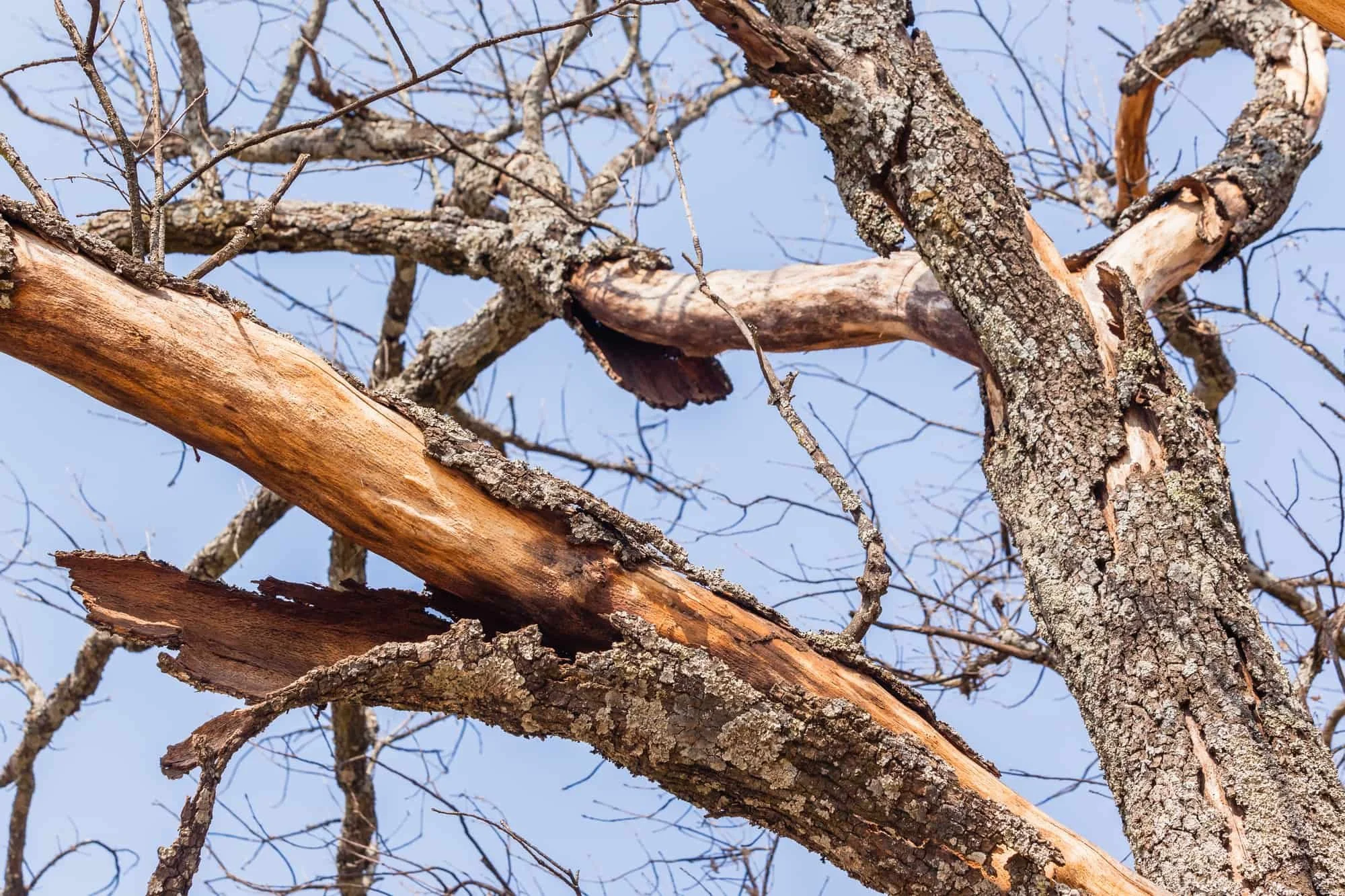
This is a structural failure in progress. Notice the peeling bark revealing the smooth, dead wood underneath and the jagged crack on the main stem. This limb is no longer supporting itself. If you see this on your property in Green Bay, do not walk under it. Call for an emergency assessment immediately.
5. Fungal Growth at the Base
Mushrooms growing at the base of your tree aren't just a sign of wet weather—they often indicate internal root rot. A tree that looks healthy on the outside but is rotting at the foundation won't stand up to a 50mph Green Bay wind gust.
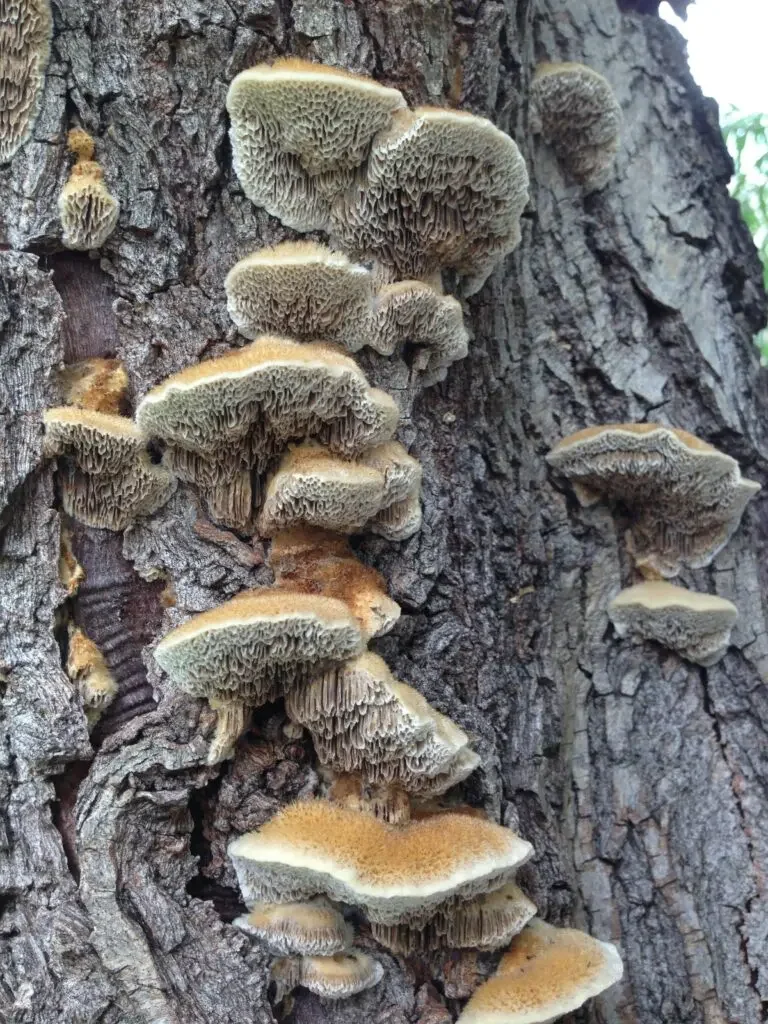
These mushrooms (conks) are the visible signs of a much deeper problem: internal rot. When you see these on a trunk in Green Bay, it means the tree’s structural heartwood is being compromised. A tree that looks healthy on the outside could be hollow on the inside, making it a major risk for "snap" during high winds.
Don’t Wait for the Emergency
Safe tree removal is about proactive management. In Green Bay, we work closely with homeowners to ensure that maintenance and removals are performed at the safest possible time for both your property and the surrounding ecosystem. Waiting for a storm to "take care of it" often results in much higher costs and potential damage to your home’s roof, siding, or foundation.
As a Licensed Tree & Brush Trimmer within the City of Green Bay, I am committed to professional, safety-first service. We understand that a major tree project can be an unexpected financial hurdle, which is why we’ve made it easier to protect your home. Through our partnership with Acorn Finance, you can address these hazards immediately and spread the cost over manageable monthly payments.
Protect your home before the next big wind or snow event. Contact us today for a free estimate and see your personalized financing options.